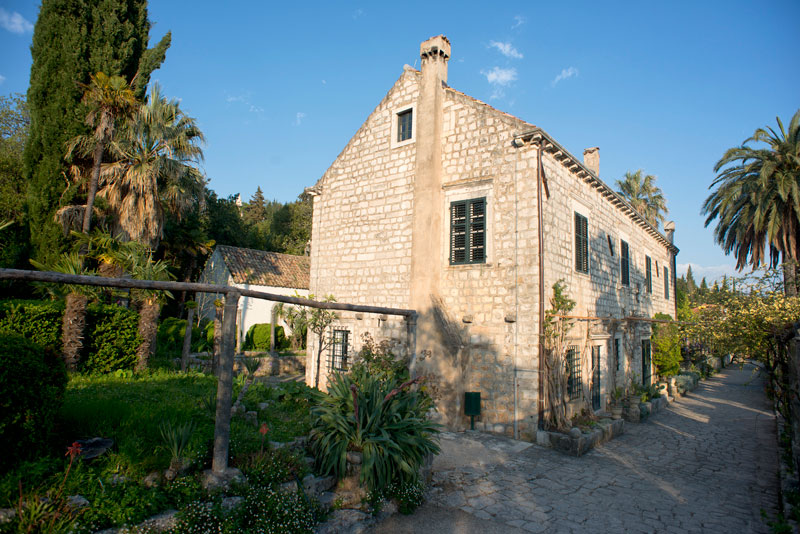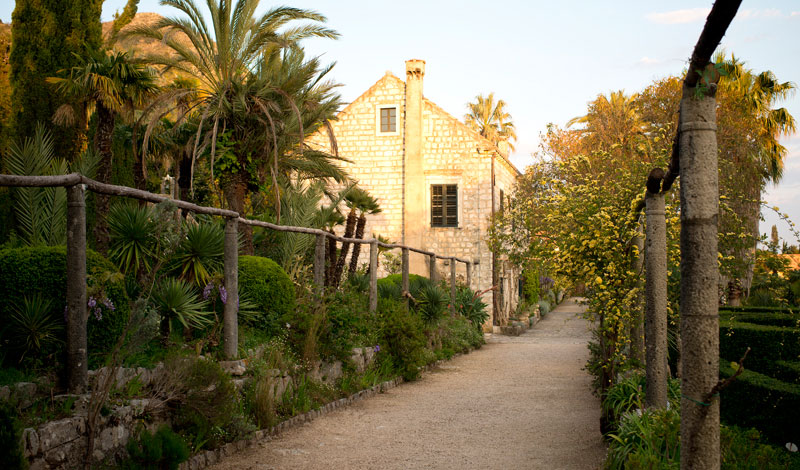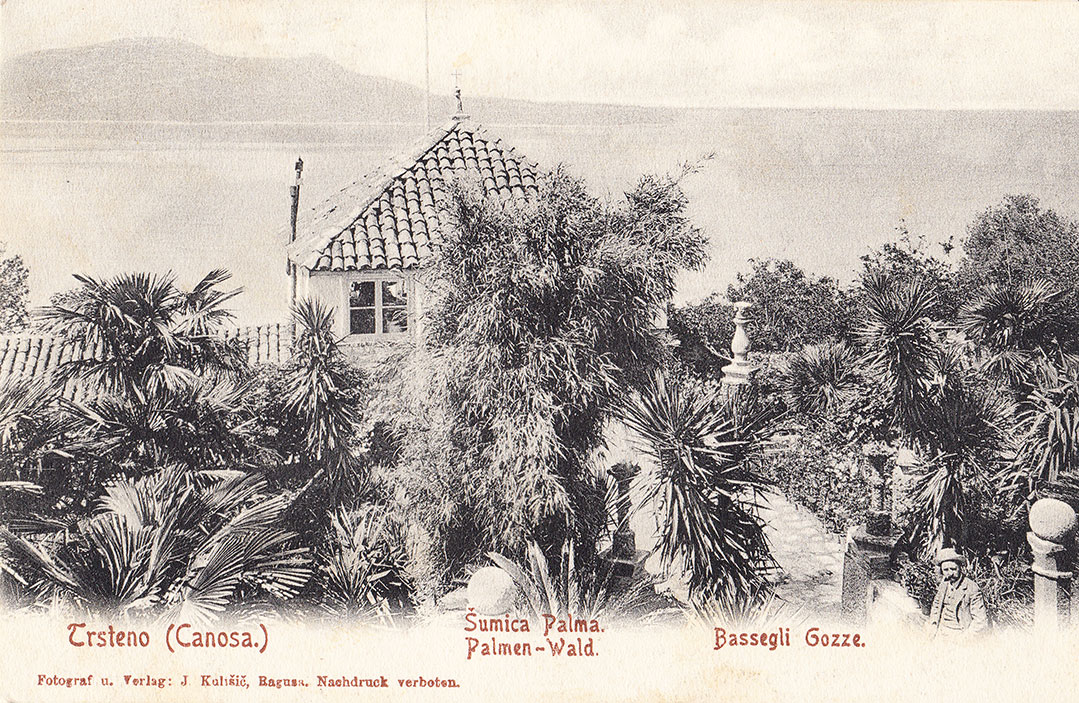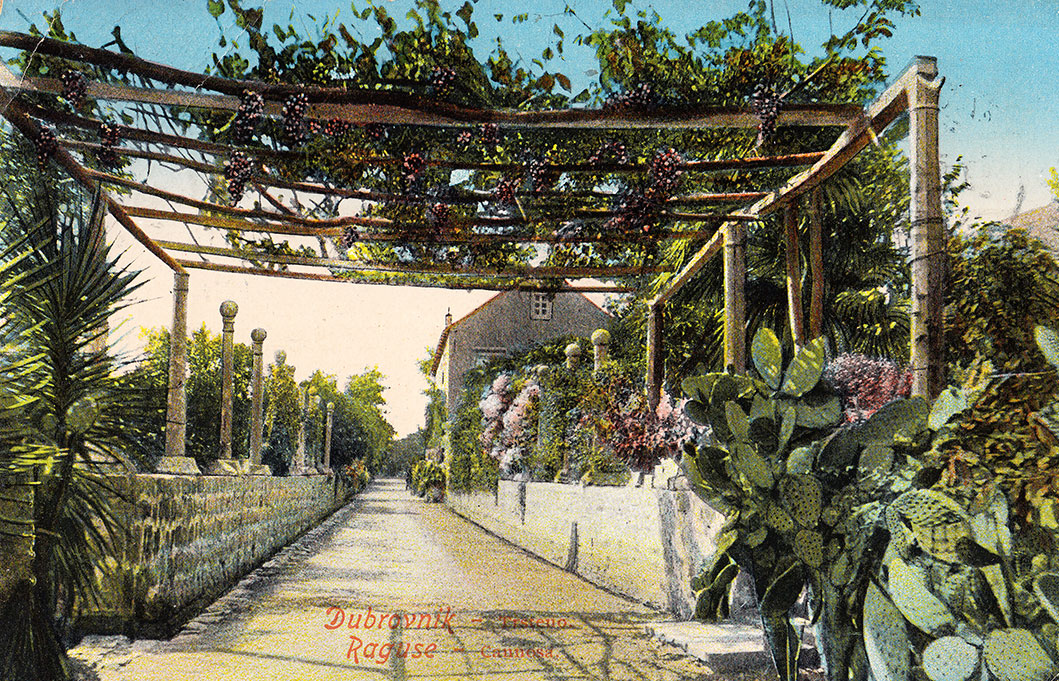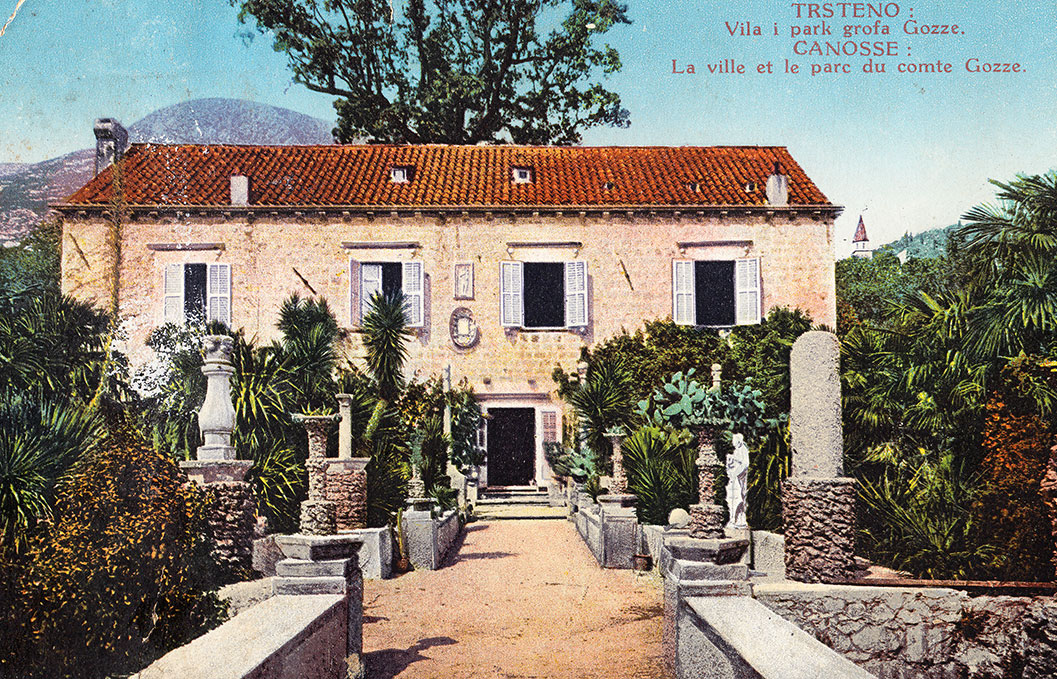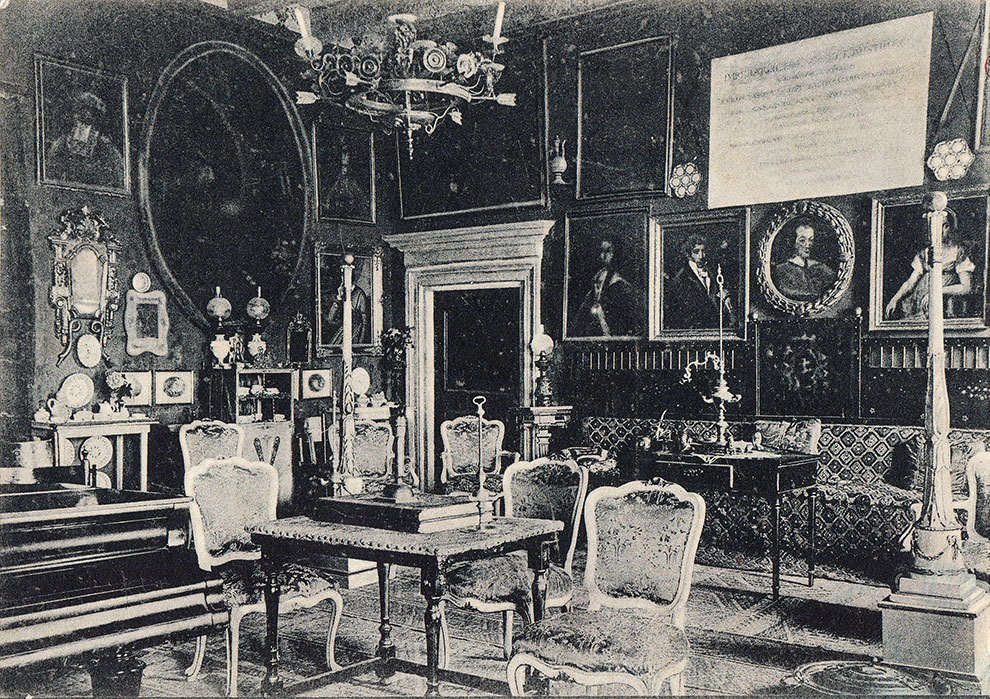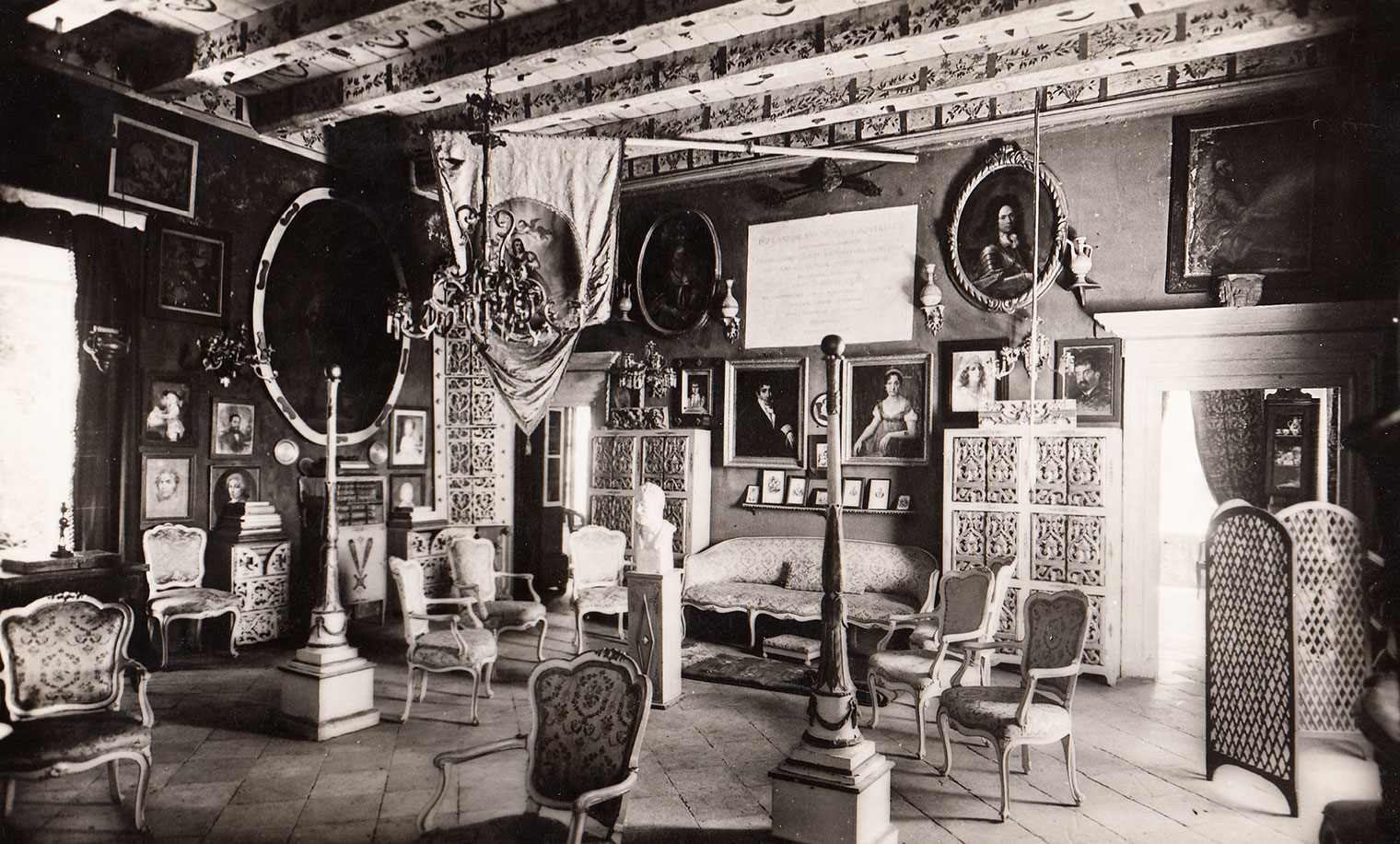


The decision to build a summer villa on his own cultivated property in Trsteno was made in 1484 by Ivan Marinov Gučetić. The construction of the summer villa is evidenced by an inscription in Latin that was built into the front of the summer villa in 1502 and which in Croatian translation reads: I am pride of my neighbours, but even more so do I pride myself on the waters, healthy climate and the work of the noble landlord. Traveller, there you have certain traces of human labour, where skilful art has perfected wild nature.
This original summer villa was destroyed in an earthquake in 1667 and a new one was built on its remains as a simple one-storey house of modest architectural equipment and classic layout which settled on the Dalmatian coast forming a typological group with a characteristic central space and four side rooms (quattro stanze, un salon).
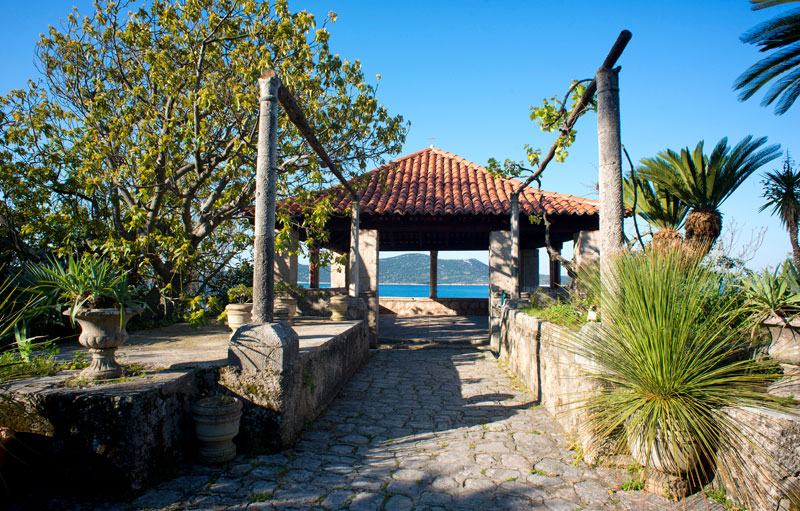
The summer villa stands out from the multitude of land estate buildings in the Republic of Dubrovnik precisely because of the relatively spacious garden, it is visible from all sides and is in direct and unobstructed contact with nature, garden, olive groves and forests, and open views of the sea and the Elaphite Islands. In the first phase of the construction of the summer residence, an axis was established that determines the direction of the aqueduct, and passes through the middle of the house and ends with a pavilion (lookout, gloriette) perpendicular to the main promenade. Such an organization of space was maintained in the following centuries when there were significant changes in construction. The Gothic-Renaissance summer villa has carved fragments in secondary use carved by Korčula masters Bartul and Frano Karlić - profiled window arches, parts of saws, lion's heads, pillars and capitals.
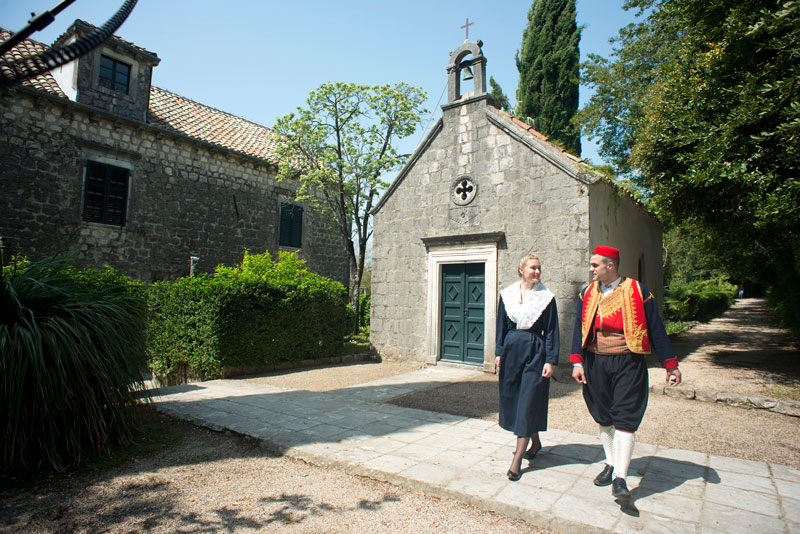
South of the summer villa , at the end of the promenade, there is a pavilion (t, gloriette). Low, four-sided corner columns and eight-sided columns carry a hipped roof on a wooden structure. It offers a magnificent view of the sea and the Elaphite Islands. North-west of the summer residence is a rectangular vaulted chapel dedicated to St. Jerome built in the 16th century. The altar made of stucco as well as the stucco decoration on the side walls date to the middle of the 18th century.
The mill has been preserved from the early period, while Drvarica was designed by Vito Bassegli Gozze at the beginning of the 20th century when a stone road to the sea and the port decorated with statues, stone fragments and an inscription was built.