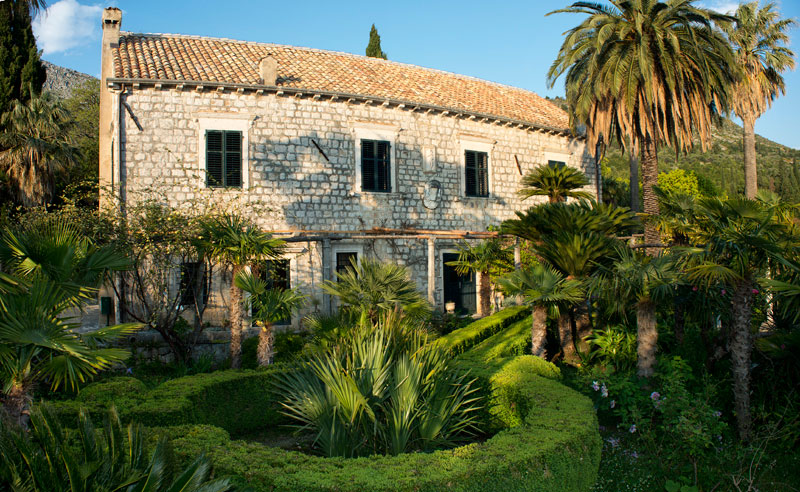


Dubrovnik's land estate construction of the 17th century, according to research thus far, is of a much reduced scope compared to the previous two centuries "but as exceptional in the diversity of understandings, which show different origins and promise different possibilities”. It is a century in which late Renaissance solutions are still in progress, several Mannerist ones stand out and the first Baroque ones are announced.
The changes that are beginning to appear in the architecture of the summer villas are only indications that precede the later, baroque solutions, because they still do not deviate from the traditional architectural type. The gardens retain their traditional features for even longer and show partial changes and the introduction of baroque expressions and forms only after the great earthquake of 1667. It is a turning point when the "golden age" of the Republic of Dubrovnik, which recovered after the earthquake but never reached the previous height of its own expression neither in residential nor in garden architecture, ends.
New facilities are included in the economic part of the land estates and also in the representative part - in the garden. It is significant that olive mills began to be built on larger estates in the 18th century, which accompanied the rapid increase in olive growing and the expansion of olive groves to previously uncultivated land.
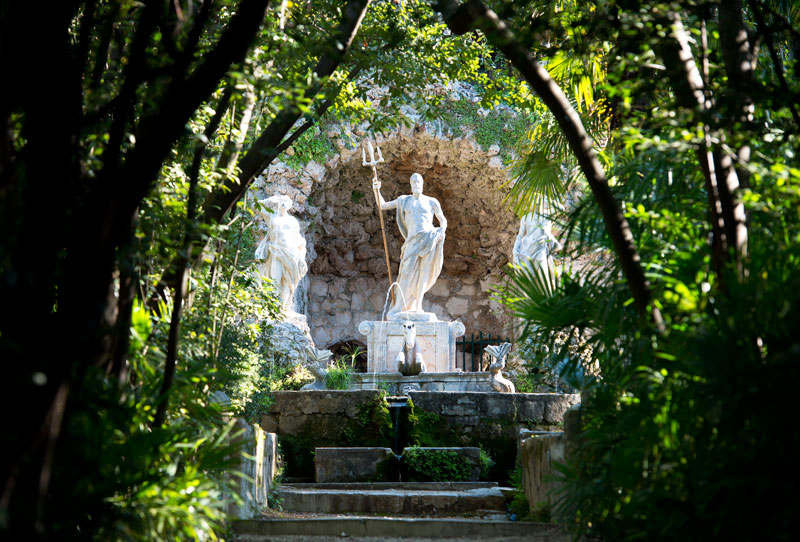
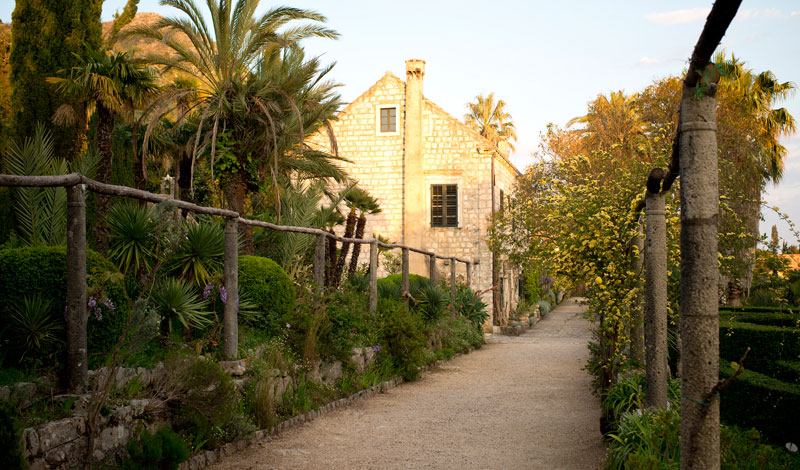
Dubrovnik gardens created in the Baroque period are few, small in size and traditional in composition, and within their spaces do not achieve wide or distant views but rely on connecting with the points of the surrounding landscape. In addition to the summer villas rebuilt after the earthquake there were also some gardens that were baroqued by the introduction of new facilities. The best preserved example is Gučetić's garden in Trsteno where the grotto and the fountain on which the added rocks have been painted have been renovated, and a space for rabbits and birds (dovecot - columbaria) was set up in the other part of the garden.
The influence of every great stylistic epoch is inevitable and the baroque was built into the Dubrovnik garden, shaping it in a special way. The main bearer of the composition is no longer exclusively the architectural part of the garden, but the vegetation masses which gradually take over this role.
Topiary art is growing in demand, but this time applied to the design of boxwood bosquets, porticos and high hedges. Within such a new composition, relationships are based on the contrasts of masses and open spaces and the effects of light and shadow. Along the edges of the garden, smaller or larger groups of trees, such as screens or groves, are significant, which are left to their natural growth and achieve a gradual connection between the garden and the surrounding landscape.