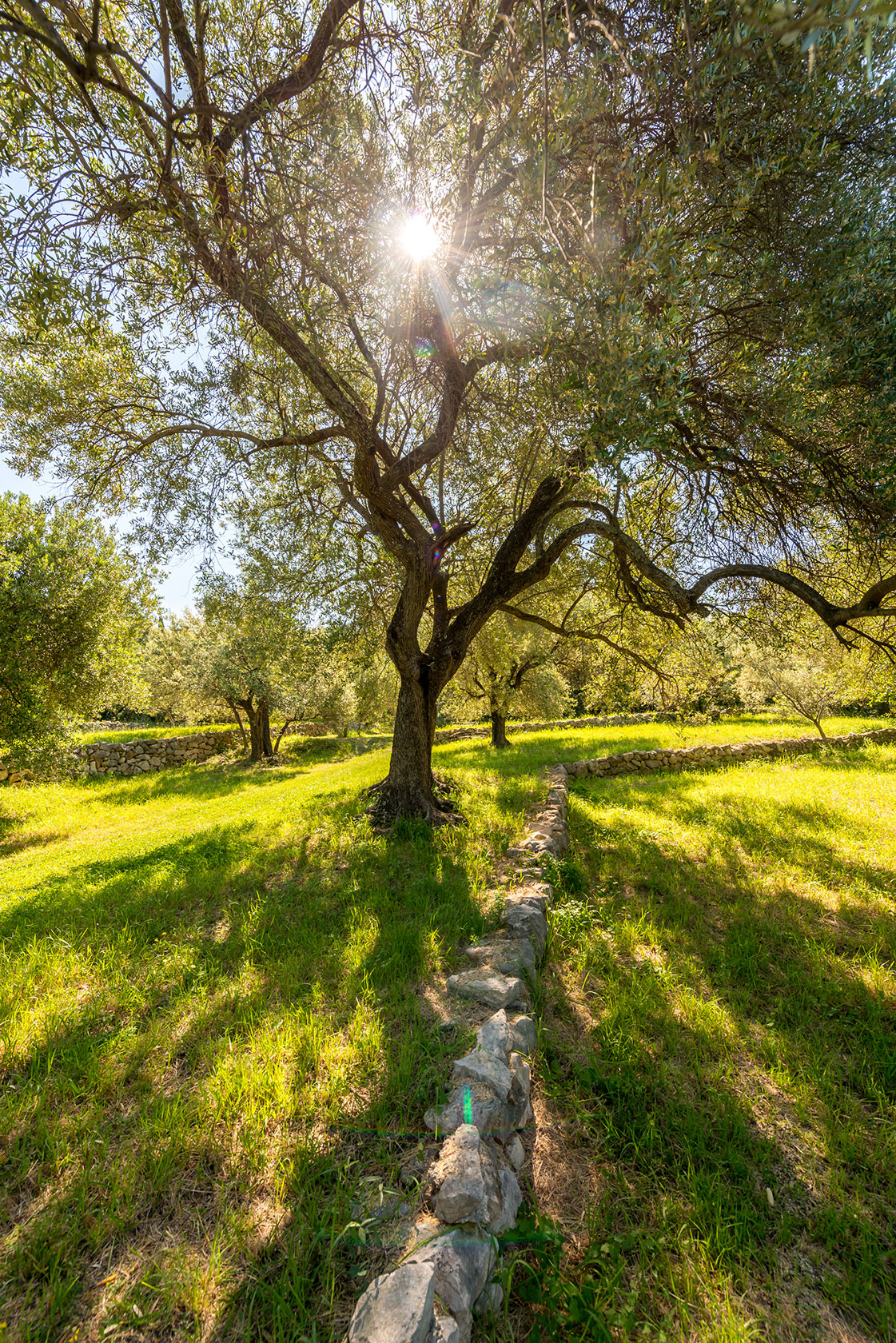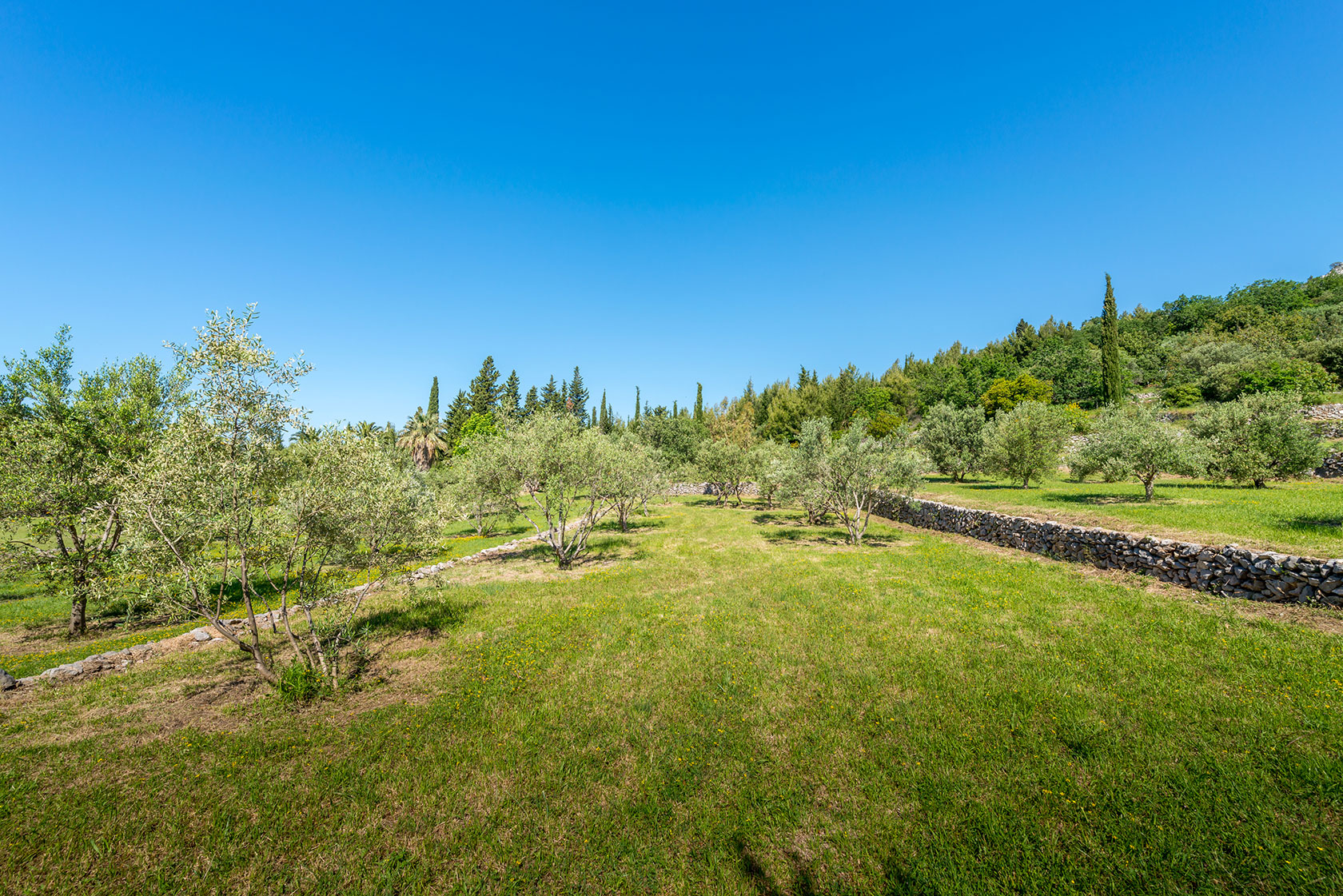


In the great summer fire of 2000, when two thirds of the entire area of the Arboretum burned down, a small area of the old olive grove was preserved. In 2002, this surviving part became the core of the restoration of the historic olive grove. In the preserved part, 7 old olive varieties were catalogued, out of the 15 recorded for the Dubrovnik littoral. Old trees were restored by pruning and fertilizing, and burned by thinning shoots and growing young trees. In parallel with the grafting and cultivation of seedlings, the remaining old varieties of the Dubrovnik littoral were introduced.
Since 2005 the renovated olive grove ( 15,370 m2) brings fruit and characteristically high quality oil.
About 200 olive trees are grown in this area, which includes 15 varieties: Oblica, Mezanica, Bjelica, Uljarica, Mrčakinja, Dužica, Jeruzalemka, Kosmača, Zuzorka, Grozdača, Velika Lastovka, Piculja, Murgulja, Žabarka and Želuldarica.
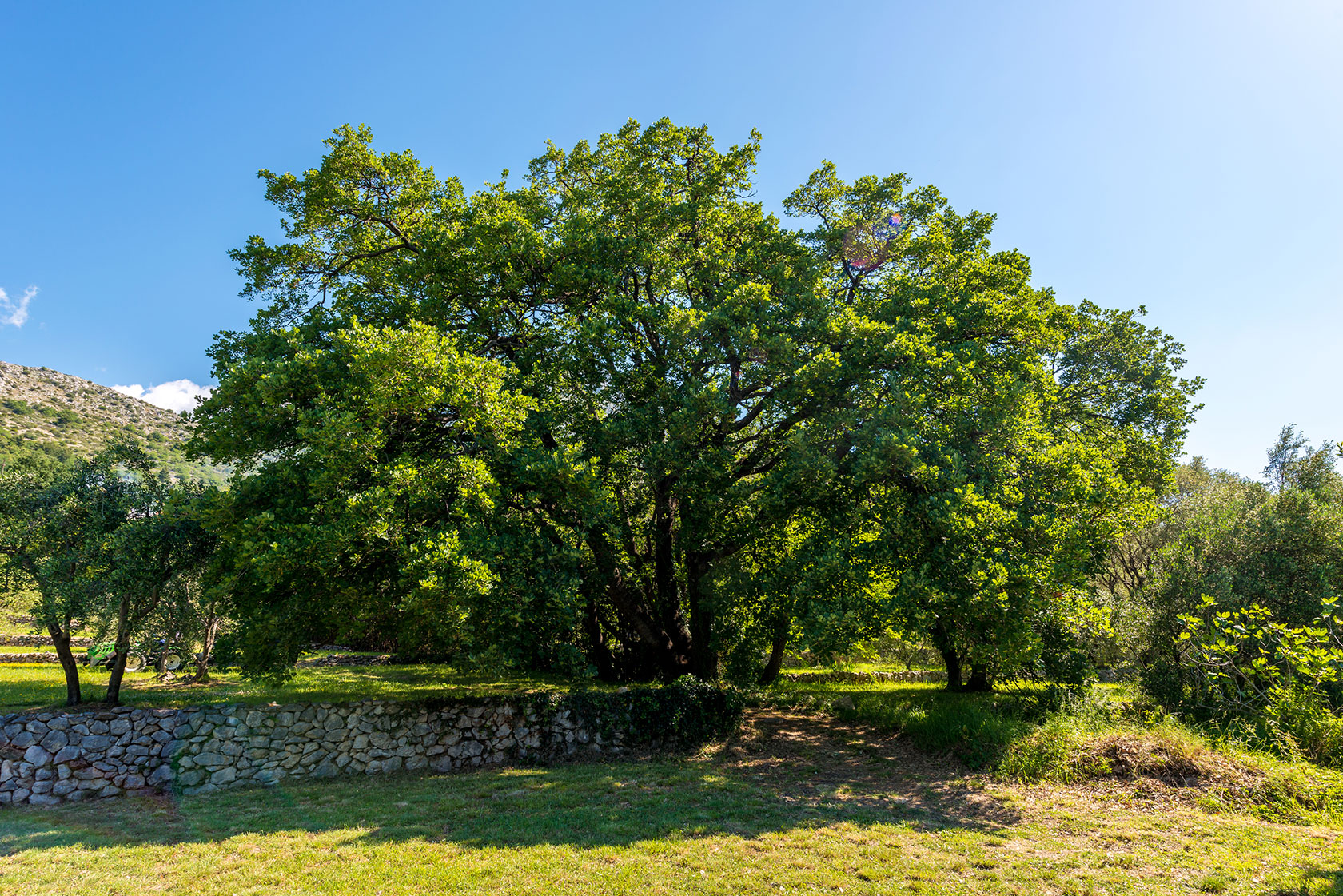
The natural regeneration of vegetation on the burned areas of the Arboretum, which before the fire were mostly under the forest of Aleppo pine and cypress, support surprisingly large numbers of restored olives. This clearly demonstrates that the entire area, except the narrower coastal belt, was terraced and cultivated as an olive grove, which was undoubtedly mixed with a culture of carob, almonds and figs.
In the areas of olive groves that could not be restored by planned restoration, the restoration of burned trees took place naturally without cultivation and to this day they are overgrown with a dense set of high vegetation that will soon outgrow them and they will die out. Such a dense assembly poses a threat and is inadmissible by fire-fighting standards.
Established interventions of fire-fighting averages would destroy the entirety of the historic olive grove and the only acceptable solution is to find the possibility of restoring the olive grove and restoring its original function. This would provide a safe, cleansed and cultivated space as an external shield to historic gardens, both of multiple importance and purpose.
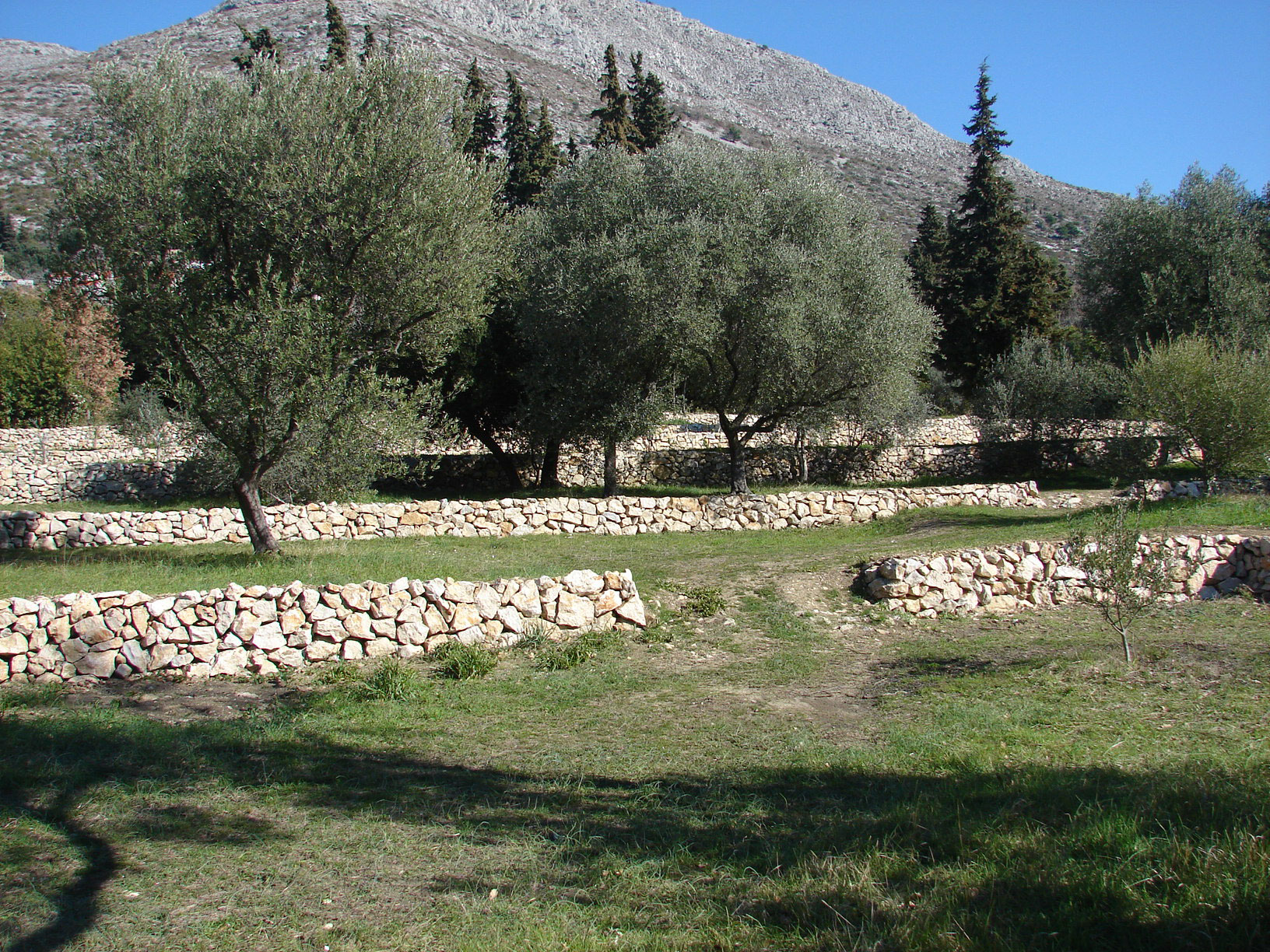
The approximate area of the new olive groves would be about 42,287 m2. Along with the planting of olive trees, the original dry stone walls would also be restored.
The goal of the restoration of the historic olive grove with the creation of a collection of indigenous varieties has a threefold purpose: preservation of cultural and ethnological heritage, preservation of the gene pool, ie indigenous, agricultural biodiversity and, finally, the inclusion of the facility within the local tourist industry.